
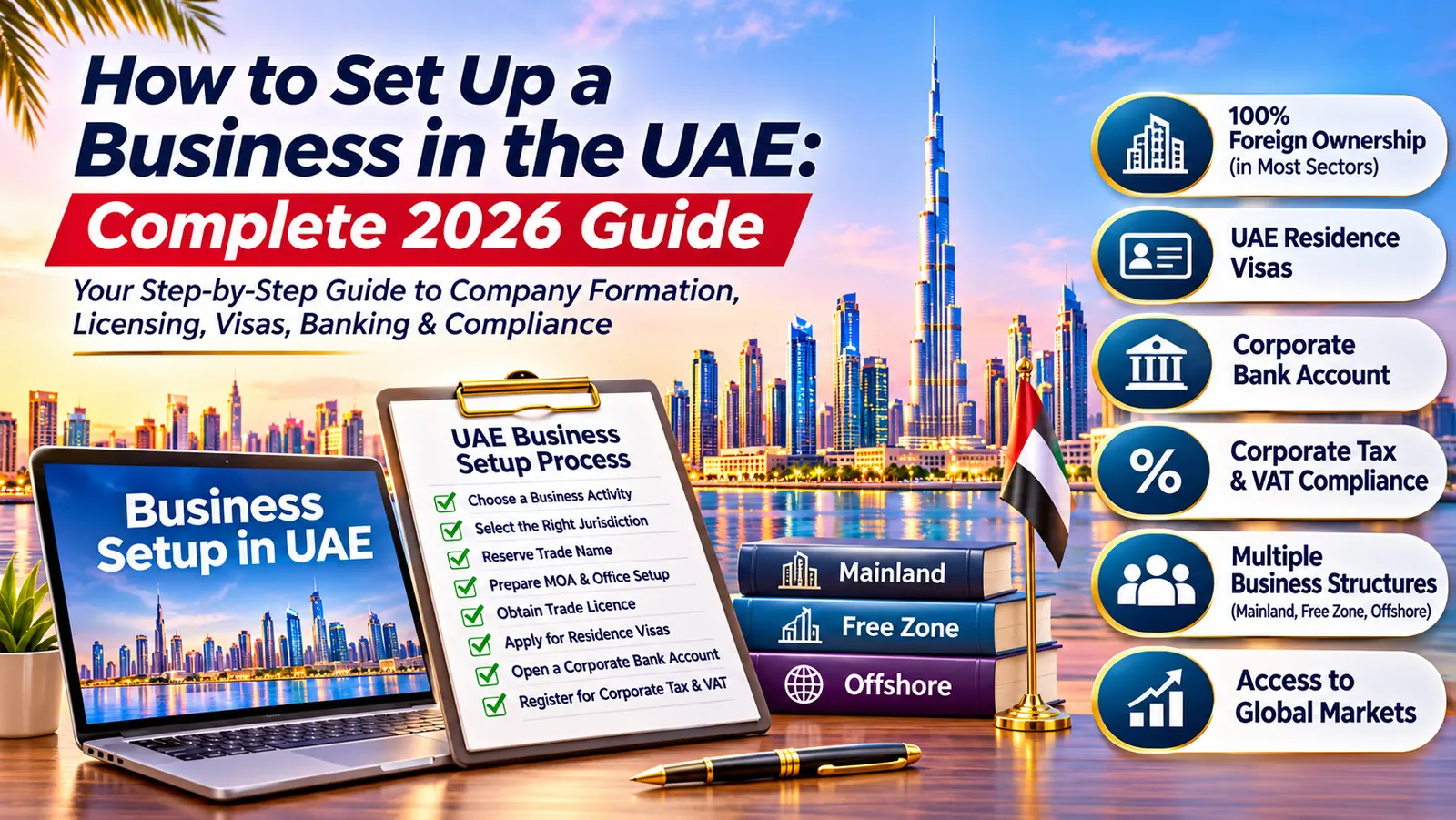
How to Set Up a Business in the UAE: Complete 2026 Guide
Business Setup in UAE involves more than registering a company: founders need to select a suitable jurisdiction and legal form, confirm that their activities can be licensed, prepare incorporation documents, and plan for premises, visas, banking and ongoing compliance. Requirements and fees differ between emirates, Mainland authorities and Free Zones. This 2026 guide outlines the main decisions and sequence for setting up a business, while recommending that current requirements be confirmed with the authority responsible for the chosen activity and location.
Start with a Business Plan and Activity List
Describe what the business will do, who its customers are, where it will operate and whether it will trade locally, internationally or online. Prepare a clear list of proposed activities before requesting a licence quotation: the activity description can affect the competent authority, legal form, external approvals, premises and permitted operations.
Check whether activities can be combined on one licence and whether any activity needs approval from a sector regulator or another government department. Do not assume a broad licence label authorises every service or product the company may wish to offer.
Choose Between Mainland and Free Zone Company Formation
A Mainland setup is generally considered by businesses seeking to operate directly in the UAE local market, contract with a wide range of UAE customers or pursue activities regulated by a Mainland authority. The responsible emirate authority, activity and legal form determine licensing conditions and approvals.
A Free Zone setup may suit businesses whose needs align with a particular zone’s activities, facilities and operating rules. Each Free Zone has its own authority, licence options, costs, office or facility requirements and visa arrangements. A Free Zone licence should not be assumed to allow unrestricted direct business in every part of the UAE Mainland; confirm the rules for the specific activity and sales model.
Compare the actual operating requirements rather than choosing on headline incorporation fees alone. Consider customer location, suppliers, staffing, premises, expansion plans, banking needs and the company’s expected tax position.
| Decision factor | Mainland setup | Free Zone setup |
|---|---|---|
| Licensing authority | Relevant emirate or Mainland licensing authority. | The authority of the selected Free Zone. |
| Operating model | Often considered for direct local-market operations; activity-specific rules apply. | Must align with the zone licence and rules for doing business outside the zone. |
| Facilities | Premises and address requirements depend on activity and authority. | Facility choices and related conditions vary by zone and package. |
| Costs and visas | Depend on activity, legal form, premises and immigration requirements. | Depend on zone, licence, facility, visa allocation and any extra approvals. |
Select the Legal Form and Ownership Structure
The appropriate legal form depends on the activity, number and type of owners, liability considerations and the relevant authority’s rules. Options can include limited liability entities, sole establishments, branches and other structures. Confirm the form available for the intended activity and whether any special ownership or professional requirements apply.
Identify shareholders, managers and authorised signatories early. Prepare the required identity and corporate documents, confirm how overseas documents must be authenticated, and make sure the company name and constitutional documents are consistent with the proposed licence application.
Obtain a UAE Trade Licence
A UAE Trade Licence authorises the company to conduct the activities listed on it, subject to applicable laws and approvals. The name and type of licence depend on the jurisdiction and activity; commercial, professional and industrial descriptions are common, but they do not replace the authority’s specific activity classification.
Before applying, confirm activity codes and descriptions, any external approvals, trade name rules, required office or facility evidence, incorporation documents, and renewal obligations. The authority may require additional approvals before or after issuing the initial licence.
Typical Company Formation Steps
The sequence can differ by authority and activity. Some businesses need preliminary approval or external regulator consent before incorporation or licensing is complete.
- Define the business model and identify all proposed activities.
- Compare Mainland and relevant Free Zone jurisdictions based on operating needs, total cost and compliance requirements.
- Confirm the legal form, ownership, trade name availability and any special approvals.
- Prepare and submit the application and incorporation documents to the chosen authority.
- Arrange the required premises or facility and complete any lease or address formalities.
- Pay the applicable charges and obtain the trade licence and company registration documents.
- Apply separately for establishment or immigration files, residence visas and other post-licensing services if required.
UAE Business Setup Cost: What to Budget For
There is no single UAE company formation cost. Obtain an itemised quotation for the first year and expected renewals, and compare the same scope across providers. A low initial package may not include all mandatory items or the facilities, visas and approvals the business will need.
- Trade name, initial approval, incorporation, licence issuance and registration charges.
- Office, desk, warehouse or other facility costs, including deposits and related administration.
- External approvals, professional permits, document translation, attestation or legalisation.
- Immigration or establishment file charges, medical testing, Emirates ID and residence visa costs.
- Banking preparation, accounting, bookkeeping, audit or tax advisory services where applicable.
- Annual renewals, amendments, visa renewals and other ongoing compliance expenses.
Visas, Office Space and Hiring
A company licence does not automatically issue a residence visa. Visa eligibility, allocation and processing depend on the jurisdiction, facility, immigration rules and the applicant’s circumstances. If the founder or employees need UAE residence, confirm the applicable establishment file, visa quota, medical and Emirates ID process, and renewal timing before selecting a package.
Premises requirements also vary. A flexi-desk or shared facility may be available for some activities and zones, while other businesses need dedicated premises, a warehouse or a regulated site. Hiring staff may introduce additional employment, payroll, insurance and workplace obligations.
Corporate Banking and Tax Registration
A trade licence does not guarantee that a bank will open an account. Banks conduct their own customer due diligence and may request information on owners, business activities, expected transaction flows, source of funds, customers, suppliers and contracts. Keep company documents and a clear business profile ready, and allow time for bank review.
Companies should assess UAE Corporate Tax, VAT and any other applicable tax obligations based on their activities, revenue, legal structure and transactions. Registration, filing and record-keeping duties are separate from company incorporation. Free Zone status alone does not ensure a particular tax outcome; seek qualified advice and verify current Federal Tax Authority requirements.
After Incorporation: Keep the Company Compliant
The responsibilities depend on the company’s legal form, activity and jurisdiction. Build renewal dates and compliance tasks into the business calendar from the start.
- Renew the licence, facility agreement and immigration file by their respective due dates.
- Keep ownership, manager, address and company records accurate and update the authority when changes occur.
- Maintain accounting records and assess tax registration, filing and payment deadlines.
- Meet applicable employment, immigration, insurance and workplace obligations.
- Maintain contracts and business records that reflect the activities the company is licensed to perform.
Frequently Asked Questions
How do I set up a business in the UAE in 2026?
Define the activity, compare Mainland and Free Zone options, select an eligible legal form, obtain required approvals, submit incorporation documents, secure the required premises and obtain the relevant trade licence. Visa, banking and tax steps are handled separately as applicable.
Is Mainland or Free Zone company formation better?
Neither is universally better. The right option depends on where and how the company will operate, its activities, customers, facilities, visa needs, costs and compliance obligations. Confirm the rules with the relevant licensing authority before deciding.
How much does UAE company formation cost?
Costs vary by jurisdiction, activities, legal form, facility, approvals, visas and renewal requirements. Request a current itemised quotation that distinguishes one-time charges, annual renewals and optional services.
Can I start a UAE company without an office?
Some jurisdictions and activities offer shared or flexi-desk facilities, while others require dedicated premises or a specific facility. Check the rules for the exact licence and activity rather than assuming an office is or is not required.
Does a UAE trade licence include a residence visa?
No. A licence and a residence visa are separate. Visa eligibility and allocation depend on the jurisdiction, facility and immigration requirements, and each visa application has its own process and charges.
Will a Free Zone company automatically be exempt from UAE Corporate Tax?
No. Free Zone status alone does not guarantee a particular Corporate Tax result. Eligibility and obligations depend on the applicable law and the company’s facts; obtain qualified tax advice and verify current FTA requirements.
Planning a company formation in Dubai or elsewhere in the UAE? Klay Consultants can help you compare jurisdiction options, understand licensing steps and prepare for the documentation process. The right setup depends on your activity, operating model and ongoing obligations, so confirm current requirements with the relevant authority before committing to a structure. Book a free consultation.
This article provides general information and is not legal, tax, immigration or financial advice. UAE licensing, ownership, facility, visa and tax requirements vary by emirate, Free Zone, activity and company circumstances, and may change. Verify current requirements with the competent authority and qualified professional advisers.