
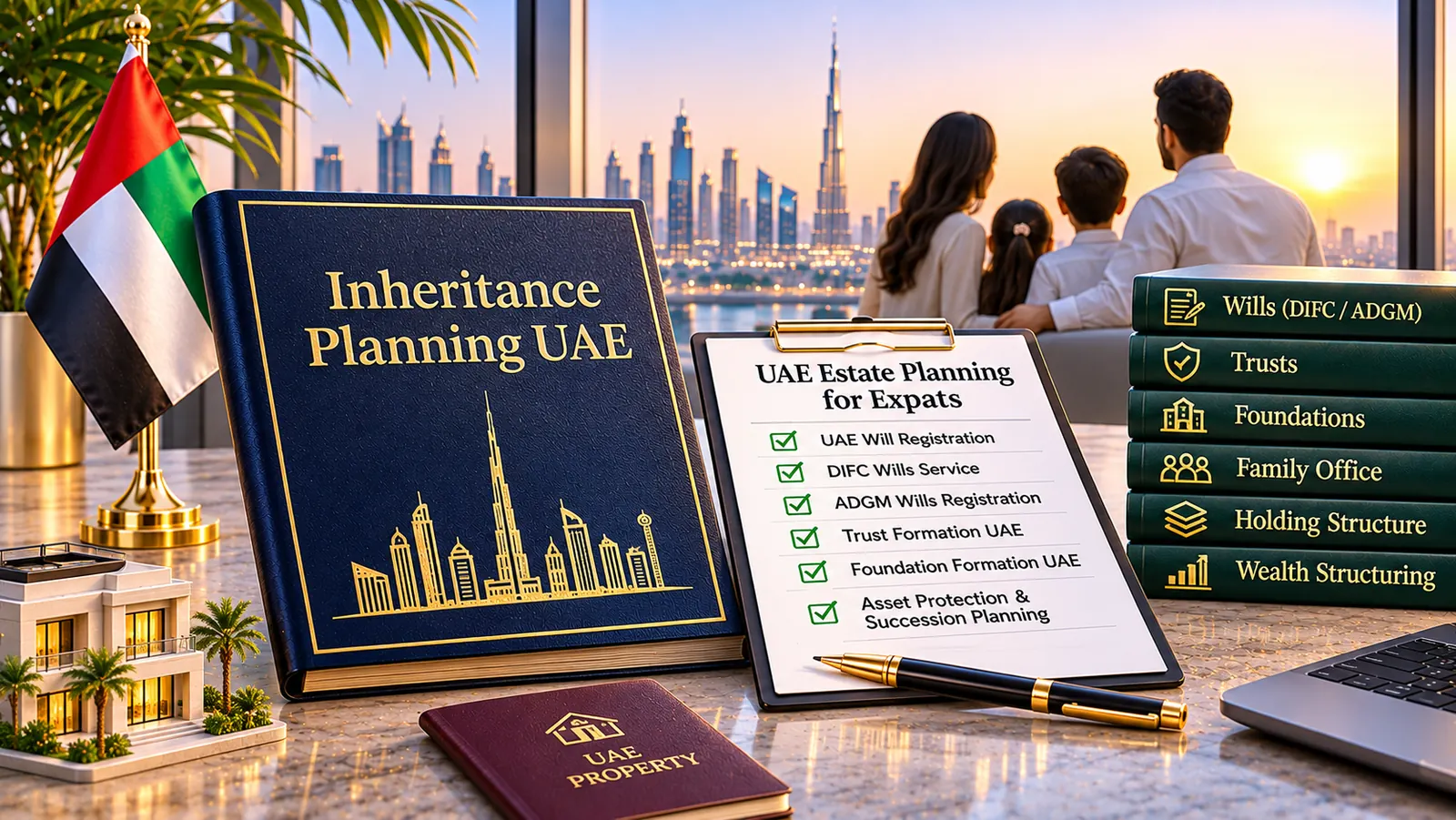
Inheritance Planning UAE: How Expats Can Protect Their Families, Property, and Business Interests
Inheritance planning in the UAE can help expats clarify how family, property and business interests may be managed if they die or lose capacity. A practical plan may involve a will, registry selection, coordinated company documents and, in some circumstances, a trust or foundation. The right approach depends on the family, asset locations, ownership and relevant laws in every jurisdiction. No single document automatically covers every asset or prevents disputes, so obtain qualified UAE and cross-border legal and tax advice before relying on a plan.
Start with Family, Property and Business Interests
Create an inventory of UAE and overseas assets, including property, bank and investment accounts, company shares, insurance and jointly owned assets. Record each asset’s legal owner, location, approximate value and any financing or contractual restrictions. Consider who may need support, who should administer affairs and how business operations would continue if an owner could no longer act.
This review helps identify whether a UAE will, another jurisdiction’s will, company governance documents or a more structured wealth-planning arrangement should be discussed with qualified advisers.
- List family members, dependants, intended beneficiaries and potential guardians where relevant.
- Map property, financial accounts and business interests by jurisdiction and legal ownership.
- Review existing wills, trusts, foundations, shareholder agreements and powers of attorney.
- Identify business continuity, management and decision-making arrangements.
Why Estate Planning Matters for UAE Expats
Many residents hold assets in more than one country, such as UAE property, bank accounts, company shares, investments and assets in their country of nationality. If someone dies or loses capacity, the process for dealing with those assets can depend on where they are located, the applicable law, family circumstances and the relevant court or registry.
Planning in advance can help document wishes, identify who should manage affairs and reduce uncertainty for family members. The appropriate instruments and their scope should be assessed with qualified UAE legal advisers and, where relevant, advisers in other countries.
What a UAE Will Can Do
A will is a legal document that records instructions for matters within its scope, such as the distribution of specified assets or, where available and applicable, guardianship wishes for minor children. Whether a particular will is valid, enforceable and effective for a given asset depends on the applicable law, the chosen registry, the person’s circumstances and the asset’s location.
Registration does not automatically mean that one document covers every asset worldwide or every family situation. Review the intended scope, eligible testator requirements, signing formalities and registry rules before relying on a will.
Will Registration Options in the UAE
Depending on eligibility and the matter, residents may explore a will through a relevant local authority or an international financial centre registry, such as the DIFC Wills Service or an ADGM service. The available will types, asset coverage, procedures, fees and signing requirements differ between registries and can change.
Some arrangements are designed for particular groups or assets and may have eligibility conditions. Confirm directly with the relevant registry and a qualified lawyer whether the proposed route is available and appropriate for your circumstances.
What Is a UAE Foundation?
A foundation is a separate legal entity established under the rules of a particular jurisdiction. It generally has a founder, a governing document, a council or equivalent governing body and defined beneficiaries or purposes, depending on the applicable framework. A foundation can hold and administer assets in accordance with its documents and jurisdictional law.
Foundations are sometimes considered for family wealth planning, holding company shares or organising succession across generations. The right structure depends on its purpose, assets, governance, tax treatment and the laws that apply to the founder and beneficiaries. Establishing a foundation involves ongoing administration and is not simply a substitute for writing a will.
Will or Foundation: Understanding the Difference
| Consideration | Will | Foundation |
|---|---|---|
| Basic role | Records directions for matters and assets within its legal scope. | A separate legal entity that holds or administers assets under its governing documents. |
| When it operates | Typically becomes relevant on death, subject to the applicable process. | Can hold and administer assets during its existence under its governance framework. |
| Governance | The document states wishes and appointments where permitted. | Governed by its charter or regulations, council and applicable law. |
| Typical planning question | How should covered assets or matters be handled on death? | Who should govern and administer designated assets or structures over time? |
| Key limitation | Scope, validity and enforcement depend on law, registry and asset location. | Does not automatically protect assets or remove tax, creditor or reporting obligations. |
DIFC and ADGM Foundations
DIFC and ADGM each have their own legal and regulatory frameworks for foundations, registration and ongoing administration. The choice should not be made by name recognition alone. Compare eligibility, permitted purposes, governance requirements, filing and renewal obligations, costs, and how the structure interacts with the assets and people involved.
A foundation’s governing law does not necessarily determine the treatment of every asset in another jurisdiction. Property, company shares, financial accounts and overseas holdings may be subject to separate ownership, transfer, registration and tax requirements.
Asset Protection: What to Consider
A foundation may provide a structured way to hold and govern assets, but it does not automatically make assets immune from creditors, legal claims, tax authorities, family claims or insolvency proceedings. Transfers can be challenged under applicable law, and the founder’s control, timing, solvency and purpose may be relevant.
Any asset-protection plan should be lawful, transparent and established for a genuine purpose. Obtain independent advice before transferring assets, especially if there are existing or anticipated creditor claims, court proceedings, contractual duties or tax obligations.
Planning for Business Owners and Family Wealth
Business owners may need to consider how shares, management authority and voting rights will be handled if they die or become unable to act. A will, shareholder arrangements, company constitutional documents, insurance and a suitable holding structure may all be relevant, but they must work together.
For families with assets in several countries, prepare a clear inventory and identify the legal owner, location and approximate value of each asset. Discuss how UAE documents interact with any existing wills, trusts, foundations or succession arrangements abroad. Avoid creating conflicting documents or transferring assets without checking consequences in every relevant jurisdiction.
Documents and Information to Prepare
The information requested varies by registry, foundation jurisdiction, asset and family circumstances. An initial planning discussion may benefit from:
- Passport, residency and contact details for the founder or testator.
- Details of spouse, children, dependants, intended beneficiaries and relevant guardians.
- A list of UAE and overseas assets, their legal owners and locations.
- Company licences, constitutional documents and shareholder records for business interests.
- Existing wills, trusts, foundations, powers of attorney or succession documents.
- Information about mortgages, guarantees, co-owners or restrictions affecting assets.
- A summary of relevant residence, nationality and tax connections.
How to Start an Estate and Succession Plan
- Identify your goals, family needs and who should make decisions or benefit.
- List assets, ownership, locations, liabilities and relevant company interests.
- Review existing wills and structures in the UAE and other connected countries.
- Ask a qualified UAE lawyer which will registry and document types may be available.
- Compare foundation jurisdictions, governance, administration and ongoing costs if considering a foundation.
- Obtain cross-border legal and tax advice before signing or transferring assets.
- Complete the applicable execution, registration and asset-transfer formalities.
- Review the plan after major family, business, residence or asset changes.
Common Estate Planning Mistakes
- Assuming a will automatically covers assets in every country.
- Treating a will and a foundation as interchangeable documents.
- Assuming a foundation automatically prevents creditor or family claims.
- Overlooking company constitutional documents and shareholder arrangements.
- Creating separate wills without checking for conflicting provisions or revocation effects.
- Transferring property or shares without considering consent, registration and tax consequences.
- Failing to update documents after a marriage, birth, relocation or significant change in assets.
- Using generic templates instead of advice that accounts for applicable law and personal facts.
Review and Maintain the Plan
Estate planning is not a one-time task. Review documents after changes in family circumstances, assets, company ownership, residence or relevant law. Keep signed originals and registration records accessible to the people who may need them, while protecting sensitive information.
Confirm any review, filing, renewal or administration obligations that apply to a foundation or registered will. A professional review can help identify whether the documents still reflect your intentions and coordinate with arrangements in other jurisdictions.
Frequently Asked Questions
Do expats in the UAE need a will?
A will may help an eligible person record wishes for matters within the chosen legal framework. Whether one is appropriate, what it can cover and which registry is available depend on personal circumstances, assets and applicable law. Seek qualified advice.
What is the difference between a UAE will and a foundation?
A will records directions for covered matters and is generally used in succession planning. A foundation is a separate legal entity that may hold and administer assets under its governing documents. They have different purposes and can have different legal, tax and administrative consequences.
Can a DIFC Will cover assets outside the UAE?
The scope and recognition of a will depend on the registry rules, asset type and the laws of the place where each asset is located. Do not assume a UAE will controls overseas assets; get advice in each relevant jurisdiction.
Are DIFC and ADGM foundations the same?
No. They operate under separate jurisdictions and rules, including their own registration, governance and ongoing obligations. Compare the current requirements and suitability for your assets and objectives.
Does a foundation protect assets from creditors?
A foundation does not automatically shield assets from creditors or legal claims. Transfers and ownership arrangements may be reviewed under applicable law, and existing obligations can affect the outcome. Obtain independent legal and tax advice before transferring assets.
Can a foundation hold shares in a UAE company?
Whether a foundation can hold particular company shares depends on the company’s legal form, licensing authority, foundation jurisdiction and applicable ownership rules. Confirm requirements with the relevant registrar and qualified advisers.
Can I have both a will and a foundation?
Some estate plans use both, because they can serve different roles. They should be coordinated carefully so that the documents, asset ownership and instructions do not conflict.
How often should I review my UAE estate plan?
Review it after significant changes such as marriage, children, relocation, new assets, business ownership changes or updates to relevant law. Confirm whether the selected registry or foundation jurisdiction has its own update or maintenance requirements.
Considering a will, foundation or succession plan in the UAE? Klay Consultants can help you understand the administrative options and coordinate next steps with qualified legal and tax professionals. Contact our team to discuss your planning needs. Book a free consultation.
This article is for general informational purposes only and is not legal, tax, financial or investment advice. Will validity, registry eligibility, asset coverage, foundation rules, creditor rights and tax consequences depend on applicable law, jurisdiction and individual circumstances and may change. Obtain independent advice from qualified UAE and cross-border legal and tax professionals before preparing documents or transferring assets.