
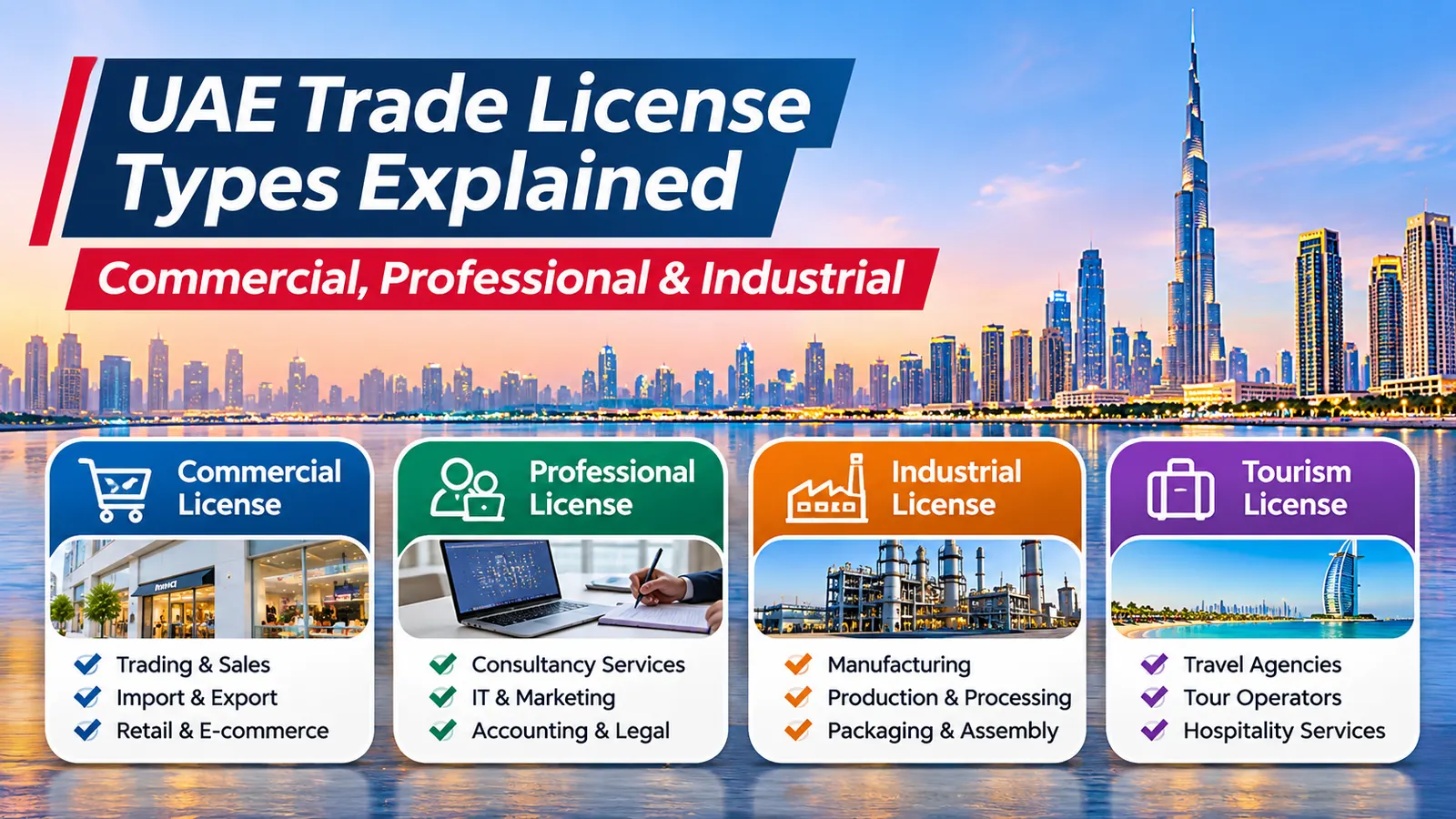
UAE Trade License Types Explained
Choosing among UAE trade license types is an important part of company formation. The licence needs to reflect the activities the business will actually perform, and the authority, legal form and location can affect the available options. Commercial, professional and industrial are common activity-based categories, while tourism-related and other regulated activities may require specific permits or approvals as well. This guide explains the main distinctions and what to check before applying.
What Is a UAE Trade License?
A trade or business licence is issued by the relevant licensing authority and identifies the activities an entity is permitted to conduct. A licence is not a general permission to provide any service or sell any product: the company should carry out only activities covered by its approved licence and any additional permits.
The authority and terminology depend on where the business is established. Mainland companies are generally licensed through the relevant emirate authority—for example, Dubai’s Department of Economy and Tourism (DET) handles many Dubai mainland activities. Free Zones issue licences under their own rules and activity lists. Some activities also require approval from a sector regulator.
Main UAE Trade License Types
The following categories describe common business activity groupings. Exact names, eligibility and permitted activity combinations vary between emirates, Free Zones and regulators, so confirm the current classification with the authority before applying.
| Common category | Typical business activities | What to check |
|---|---|---|
| Commercial | Trading, buying and selling goods, import and export, distribution and certain retail activities. | The exact goods, trading scope, premises and any product-specific approvals. |
| Professional | Services based on skills or expertise, such as consultancy, design, marketing and some technical services. | Qualifications, professional approvals, legal form and whether the activity is regulated. |
| Industrial | Manufacturing, production, processing and other industrial operations. | Facility and zoning requirements, environmental or municipal approvals, and equipment or safety standards. |
| Tourism-related | Travel, tourism, tour operation, hospitality or other visitor services. | This may require a relevant base licence plus tourism-specific permits from the competent authority. |
Commercial License
A UAE commercial license generally covers specified trading activities. Depending on the authority and approved activity, a company may trade in particular goods, distribute products, import or export, or operate certain retail and wholesale businesses.
The activity description matters. A general trading activity, a specialised product activity and an e-commerce activity may have different eligibility, costs, premises rules or approvals. If products are regulated—such as certain foods, medical products or cosmetics—additional product registration, import or sector approvals may apply before sale.
- Prepare a clear list of the products and markets the company plans to serve.
- Confirm whether import, export, wholesale and retail are included or require separate activities.
- Check product-specific registrations and approvals before signing supplier or customer contracts.
Professional License
A professional license is commonly used for service businesses where the work depends on expertise, skills or professional qualifications. Examples may include consultancy, design, marketing, education-related services and technical or creative work, subject to the licensing authority’s activity list.
Some professions are regulated. The applicant may need recognised qualifications, professional membership, approval from a regulator or a particular legal form. Do not assume that a general consultancy activity covers a regulated service; verify the exact activity wording and conditions.
Industrial License
An industrial license may be required for manufacturing, processing or production activities. These businesses can have more extensive facility requirements than a service company, such as suitable industrial premises, equipment, safety measures and environmental or municipal clearances.
Before leasing or fitting out a site, confirm that its location and permitted use match the planned operation. The relevant authority may need to review the production process, facility layout or other technical details, and additional approvals can apply depending on the products and activity.
Tourism and Other Regulated Activities
Tourism is not always a standalone licence category with the same meaning across the UAE. Travel agencies, tour operators, hospitality providers and visitor-service businesses may need a base commercial or professional licence together with permits or approvals from the relevant tourism authority.
The same principle applies to other regulated sectors, including healthcare, education, financial services, legal services, transport and certain food-related activities. Identify the regulator early and include its approvals, qualifications, inspections and renewal conditions in the setup plan.
Mainland and Free Zone Licensing
Mainland and Free Zone authorities can use different activity lists, application steps and licence names. Mainland licensing may be suitable for businesses that need to operate directly in the local market, while a Free Zone can offer a framework tailored to the chosen zone and its permitted activities. The right option depends on where and how the company will operate.
A licence from one authority does not automatically grant permission to conduct every activity or operate under another authority’s framework. Check the activity scope, customer access, cross-jurisdiction arrangements, premises rules and any additional permits before choosing a location.
How to Choose the Right UAE Business License
Start with the actual products or services the company will offer, rather than choosing a licence based only on a package name. Then compare the authority’s activity options and conditions against your operating plan.
- Write down the specific goods, services and business processes you intend to carry out.
- Identify the emirate or Free Zone and the relevant licensing authority.
- Match each planned activity to the authority’s current official activity list.
- Check whether activities can be combined under one licence and whether any have special ownership or legal-form conditions.
- Identify sector regulators, qualification requirements, product registrations or other external approvals.
- Confirm premises, visa, inspection, renewal and fee requirements before committing to a setup.
- Review the final activity wording on the issued licence and keep it consistent with actual operations.
Documents and Requirements
The documents required for a UAE business license vary by authority, activity and legal form. Common application requirements may include:
- Passport and contact details for shareholders, directors or managers.
- Proposed company names and a list of intended business activities.
- Initial approval and application forms from the licensing authority.
- Incorporation documents, shareholder resolutions or powers of attorney, where relevant.
- Proof of qualifications, experience or professional membership for certain activities.
- Premises or tenancy documents if required for the activity.
- External regulator approvals, product details or technical documents for regulated activities.
Costs, Renewals and Compliance
There is no single UAE trade license fee that applies to all businesses. The total depends on the authority, selected activities, legal form, approvals, office or facility, visa requirements and any optional services. Ask for an itemised quotation that distinguishes licence issuance and government charges from premises, visas, approvals and professional fees.
Licences generally require renewal, and the company may have separate renewal or filing obligations for premises, visas, permits and sector registrations. Keep records of expiry dates and notify the authority when business activities, ownership or company details change. Confirm the current requirements for the specific licence rather than relying on another company’s fees or timeline.
Common Licensing Mistakes to Avoid
- Choosing a broad-sounding activity without checking its official scope.
- Assuming a licence covers additional products, services or regulated work automatically.
- Treating mainland and Free Zone activity lists or permissions as interchangeable.
- Signing a lease or purchasing equipment before confirming the premises requirements.
- Overlooking external regulator approvals, qualifications or product registrations.
- Comparing providers by a starting price without checking inclusions and renewal costs.
- Continuing operations after the company’s activities or licensing conditions have changed.
Final Thoughts
The right UAE trade license is the one that accurately covers the company’s intended activities and fits its chosen jurisdiction, premises and regulatory obligations. Commercial, professional and industrial licences serve different operating models, and tourism or other regulated work may need additional permits.
Confirm the official activity wording, approvals, costs and renewal conditions with the relevant authority before applying. Careful planning can help avoid amendments, delays and compliance issues as the business grows.
Frequently Asked Questions
What are the main UAE trade license types?
Commercial, professional and industrial are common activity-based licence categories. Tourism-related and other regulated activities may require a relevant base licence plus additional permits or approvals. Categories and names vary by authority.
Which UAE license is suitable for a consultancy?
A consultancy may qualify for a professional activity, but the correct activity depends on the services offered. Regulated consulting fields may need qualifications or additional approvals. Confirm the precise activity with the licensing authority.
Does a commercial license cover all types of trading?
No. The approved activities define the permitted scope. Product type, import or export, retail or wholesale, and regulated goods can affect which activities and additional approvals are required.
Is a tourism license a separate UAE license type?
The treatment of tourism activities varies by authority. A tourism-related business may require a base commercial or professional licence along with tourism-specific permits. Check with the competent tourism and licensing authorities.
Can I include multiple activities on one UAE trade license?
Some authorities allow compatible activities to be combined, while others restrict combinations or require separate approvals. Confirm the current rules and fees with the selected authority before applying.
Do mainland and Free Zone companies use the same license types?
The broad concepts may overlap, but authorities have their own activity lists, terminology and conditions. A licence issued by one authority should not be assumed to provide permissions under another authority’s framework.
What happens if I conduct an activity that is not on my license?
Operating outside the approved scope can create regulatory and commercial issues. Contact the licensing authority to confirm whether the activity can be added and whether additional approvals are needed before conducting it.
How much does a UAE trade license cost?
Fees vary by authority, activity, legal form, premises and approvals. Request an itemised quote that includes issuance, government charges, facility costs, visas, external approvals and renewals.
Need help identifying the right activity and licence for your plans? Klay Consultants can help you compare UAE mainland and Free Zone options, understand potential approvals and prepare for the application process. Contact our team to discuss your business setup. Book a free consultation.
This article is for general informational purposes only and is not legal or regulatory advice. Licence categories, activity lists, eligibility, fees, documents and approvals vary by emirate, Free Zone, regulator and individual circumstances, and may change. Confirm current requirements with the relevant licensing and sector authorities before conducting business.