
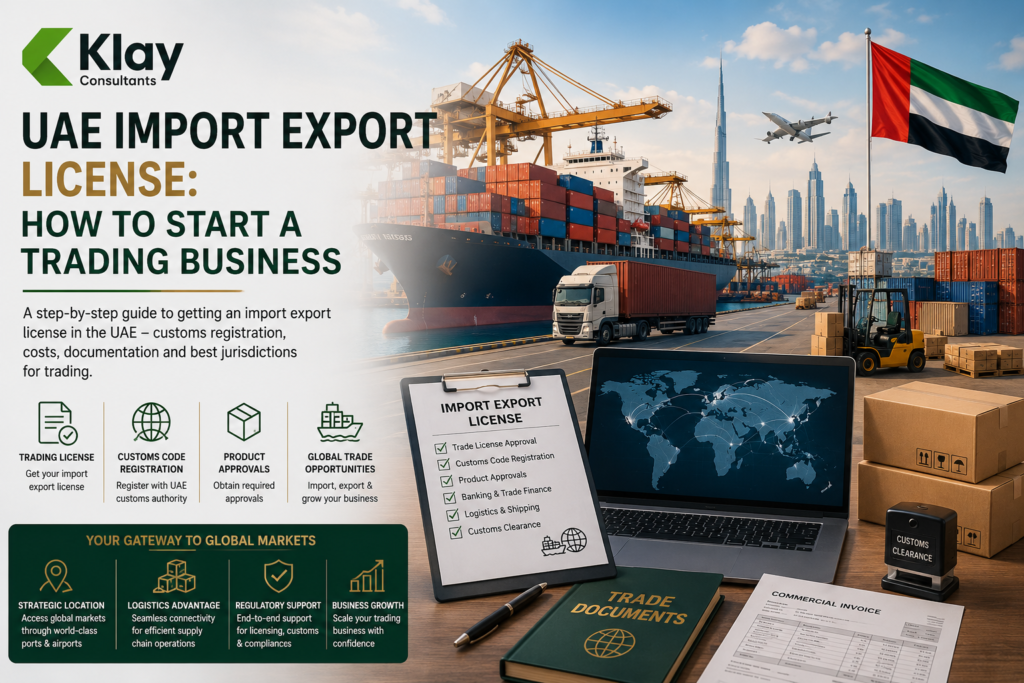
Learn how to get an import export license in the UAE, including customs registration, costs, documentation, product approvals and jurisdiction options.
UAE Import Export License: How to Start a Trading Business
The UAE’s position as a global logistics hub, supported by major ports such as Jebel Ali and international airports such as Dubai International, makes it an attractive base for founders looking to start an import, export or general trading business.
However, getting an import export license in the UAE involves more than obtaining a basic commercial licence. Depending on your products and business model, you may also need customs registration, product-specific approvals, warehousing arrangements and logistics support.
This guide explains the key steps involved in setting up and operating a trading business in the UAE.
What Is an Import Export (Trading) License?
A trading licence authorizes a company to buy and sell goods and, subject to the applicable customs and regulatory requirements, import goods into the UAE and export or re-export them to other markets.
Trading activities generally fall under the commercial licensing category. However, import and export businesses have additional customs and product-compliance requirements beyond the basic company licence.
General Trading vs Specific Product Trading License
Some UAE jurisdictions offer general trading activities that allow businesses to trade across multiple permitted product categories under the relevant licence. This can be useful for founders dealing with several different product lines.
Other businesses may choose a more specific product-category activity, such as electronics, textiles or food products. While a narrower activity can sometimes be more appropriate for a focused business model, expanding into unrelated product categories later may require additional approvals or licence amendments.
The right option depends on your planned product range, jurisdiction and long-term expansion strategy.
Choosing Your Jurisdiction: Mainland vs Free Zone for Trading
Free Zones located close to major ports and airports are popular with trading businesses because of their proximity to logistics infrastructure and customs facilities.
Examples include JAFZA, located near Jebel Ali Port, and DAFZA, located close to Dubai International Airport. Other emirates also have Free Zones designed to support trading, logistics and distribution activities.
Mainland licensing may be more appropriate for businesses that need to sell directly to UAE-based customers, depending on the applicable activity and distribution rules.
When choosing between Mainland and Free Zone setup, consider your target customers, product category, logistics requirements, warehouse needs, customs arrangements and expected expansion plans.
Step-by-Step: Setting Up Your Trading Business
1. Choose Your Trading Activity Scope
First, determine whether your business requires a general trading activity or a specific product-category activity. Your choice can affect licensing requirements, costs and how easily you can expand your product range in the future.
2. Select Your Jurisdiction
Choose between Mainland and Free Zone based on your customer base, logistics requirements, import and export plans, warehouse needs and overall business strategy.
3. Complete Company Incorporation
Once the activity and jurisdiction have been selected, complete the applicable company formation and licensing process. This generally includes trade name approval, initial approvals, incorporation documents and licence issuance.
4. Register for a Customs Code
Import and export businesses generally need to register with the relevant customs authority before clearing shipments. The customs registration or client code allows customs declarations and shipments to be processed under the company’s name.
The exact process and terminology can vary between emirates and customs authorities.
5. Obtain Product-Specific Approvals Where Applicable
Certain products are subject to additional regulatory requirements before they can be imported, distributed or sold in the UAE.
Depending on the product category, approvals or registrations may involve the relevant food safety, health, standards, municipality or other regulatory authority.
6. Set Up Banking and Trade Finance Relationships
Trading businesses often require banking services that support international transactions and trade finance. Depending on the business model, this may include instruments such as letters of credit and other trade-finance facilities.
It is advisable to discuss your trading model with potential banks early, as requirements and available facilities can differ between financial institutions.
7. Arrange Logistics and Customs Clearance Support
Many trading companies work with customs brokers, freight forwarders and logistics providers to manage import and export documentation, customs clearance, transportation and warehousing.
Working with experienced logistics partners can be particularly useful during the early stages of the business while your internal team develops its own customs and compliance expertise.
What Does Customs Code Registration Involve?
Customs registration generally requires your valid trade licence and company documentation. Depending on the emirate, customs authority and business circumstances, additional requirements such as guarantees or deposits may apply.
The customs registration enables your company to process applicable import and export declarations and clear shipments through the relevant customs authority.
The exact documentation, fees and procedures vary between emirates, so the requirements should be confirmed with the relevant customs authority before your first shipment.
Common Product Categories Requiring Extra Approval
Certain categories of goods can be subject to additional regulatory controls. Examples include:
- Food and beverage products: May require registration and approval from the relevant food safety or health authority.
- Cosmetics and personal care products: May require product registration or approval from the relevant authority.
- Electronics: Certain products may be subject to applicable UAE conformity and standards requirements.
- Medical devices and pharmaceuticals: May require approvals or registrations from the relevant health authorities.
- Other regulated products: Additional approvals may apply depending on the nature, ingredients, intended use and classification of the goods.
Importers should confirm product-specific requirements before shipping goods to the UAE to reduce the risk of customs delays or rejected shipments.
Costs to Budget For
The total cost of establishing an import and export business depends on the jurisdiction, activity, product category, warehouse requirements and trading volume.
Common costs can include:
- Trading licence fees
- General or product-specific activity fees
- Customs registration fees
- Product-specific regulatory approval fees, where applicable
- Warehouse or storage costs
- Customs broker fees
- Freight forwarder and logistics costs
- Business banking and trade finance costs
- Visa and immigration costs
Common Mistakes Trading Business Founders Make
- Choosing a narrow product-category activity and later discovering that additional products require amendments or approvals
- Failing to complete the relevant customs registration before attempting to clear the first shipment
- Overlooking product-specific regulatory approvals and discovering compliance issues only after goods arrive
- Underestimating warehousing, freight, customs clearance and logistics costs
- Not discussing international payment and trade finance requirements with banks early enough
- Choosing a jurisdiction based only on licence cost without considering ports, airports, customers and logistics
Frequently Asked Questions
Do I need a customs code for every shipment?
No. Customs registration is generally linked to your company rather than being obtained separately for every shipment. However, individual shipments still require the appropriate customs declarations, documentation and clearance procedures.
Can a Free Zone trading company sell directly to UAE customers?
The ability of a Free Zone company to sell directly to customers in the UAE Mainland depends on the applicable activity, distribution structure and current regulations. In some cases, a local distributor or appropriate Mainland arrangement may be required.
How long does customs registration take?
The timeframe varies depending on the emirate, customs authority and whether all required company documents are ready. Once the trade licence and supporting documentation are in place, the registration process can generally be completed relatively quickly.
Do all imported products require additional approval?
No. Additional approvals depend on the type and classification of goods. Certain regulated categories, including food, cosmetics, medical products and specific electronic products, may require additional registrations or conformity approvals.
Is a general trading licence better than a specific trading licence?
Neither option is universally better. A general trading activity can provide greater flexibility for businesses handling multiple permitted product categories, while a specific activity may be more suitable for a focused product range. The best option depends on your products and long-term business plans.
Should I choose Mainland or Free Zone for an import export business?
The right jurisdiction depends on your customers, product category, logistics model, warehouse requirements and intended UAE sales strategy. Free Zones can be attractive for international trading and logistics, while Mainland setup can be appropriate for businesses that need to operate directly within the UAE market.
Starting a Trading Business in the UAE?
Setting up an import and export business in the UAE involves more than obtaining a trading licence. Customs registration, product-specific approvals, banking, logistics and warehousing can all play an important role in getting your business operational.
Klay Consultants can assist with trading business setup, licensing and customs registration while helping you identify the appropriate jurisdiction and structure for your business.
Planning to start an import or export business in the UAE? Contact Klay Consultants to discuss your trading activity, licensing requirements and setup plan.